
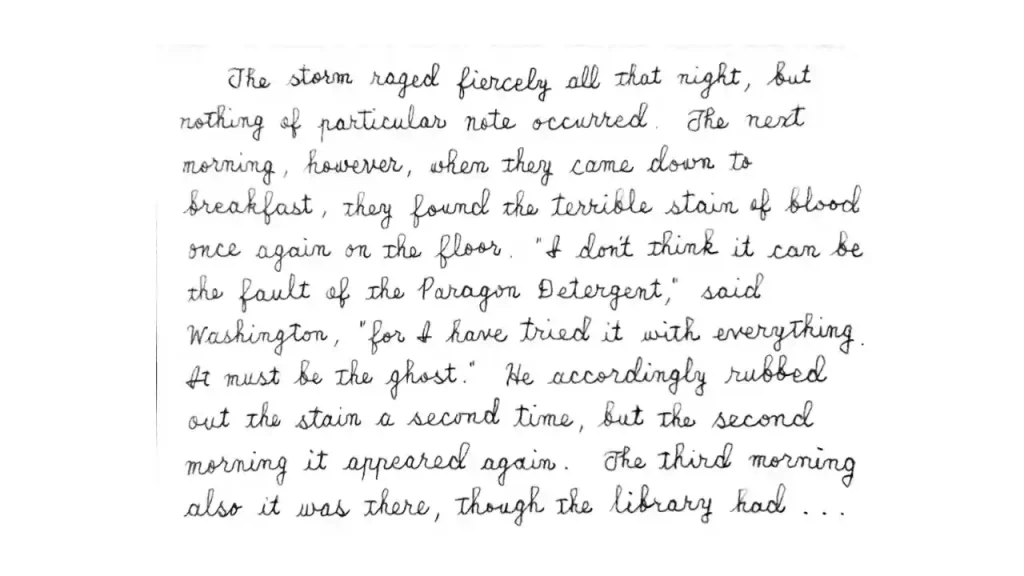
The storm raged fiercely all that night, but nothing of particular note occurred.
The Canterville Ghost by Oscar Wilde
Grammar
subject: あらし
predicate: もういをふるう
Japanese Translation
その嵐は一晩中猛威を振るった。しかし、特別な事は何も起きなかった。
- dictionary form
- 猛威を振るう(もういをふるう, to wreak havoc)
もういをふるう means to cause widespread destruction, chaos, or intense impact—often in a violent or uncontrollable way. It’s used for natural disasters, diseases, or even powerful emotions or forces that overwhelm systems or people.
The next morning, however, when they came down to breakfast, they found the terrible stain of blood once again on the floor.
modifier: よくあさ
subject: かれら
predicate: みつける
modifier: シミを
しかしながら、翌朝、オーティス一家が朝食に下りると、彼らはゾッとする血のシミを見つけた。それは再び床の上にあったのだ。
“I don’t think it can be the fault of the Paragon Detergent,” said Washington, “for I have tried it with everything. It must be the ghost.”
「パラゴン・デタージェントに欠陥があるとは思わない」ワシントンが言った。
「私は何にでもそれを使っていたのだから。幽霊の仕業に違いない」
- 仕業(しわざ, act / deed)
He accordingly rubbed out the stain a second time, but the second morning it appeared again.
彼は血のシミをもう一度こすり落としたが、次の朝もシミは現れた。
The third morning also it was there, though the library had been locked up at night by Mr. Otis himself, and the key carried up-stairs.
その次の朝も、シミがあった。ミスター・オーティス自身が夜にライブラリを施錠して、その鍵は二階にあったのに。
The whole family were now quite interested; Mr. Otis began to suspect that he had been too dogmatic in his denial of the existence of ghosts, Mrs. Otis expressed her intention of joining the Psychical Society, and Washington prepared a long letter to Messrs. Myers and Podmore on the subject of the Permanence of Sanguineous Stains when connected with Crime.
subject: ぜんいん
predicate: きょうみをもつ
一家全員がその時完全に興味を持った。
ミスター・オーティスは、自分が幽霊の存在の否定に独断的過ぎたかもしれないと思い始めた。
ミセス・オーティスは心霊協会に加入する意向を表明した。
ワシントンはマイヤーズアンドパドモア社へ長い手紙を用意した。犯罪に関わる血のシミの永続性について。
- 興味を持つ(きょうみをもつ, to take interest)
That night all doubts about the objective existence of phantasmata were removed for ever.
その夜、幽霊の存在に関する疑いはなくなった。
- 疑いない(うたがいない, to be certain / to be unquestionable)
The day had been warm and sunny; and, in the cool of the evening, the whole family went out to drive.
subject: いっか
predicate: でかける
その日は暖かく晴れていた。
夕方の涼しさの中、一家は全員ドライブに出かけた。
They did not return home till nine o’clock, when they had a light supper.
彼らは9時まで家に戻らなかった。帰った後に彼らは軽食を食べた。
The conversation in no way turned upon ghosts, so there were not even those primary conditions of receptive expectations which so often precede the presentation of psychical phenomena.
subject: かいわ
predicate: ゆうれいと・かんけいない
その会話は幽霊と関係なかった。だから、幽霊を見る状態にはならなかった。しばしば、それは心霊現象の出現に先立つのだ。
- 無関係(むかんけい, to be unrelated / irrelevant)
The subjects discussed, as I have since learned from Mr. Otis, were merely such as form the ordinary conversation of cultured Americans of the better class, such as the immense superiority of Miss Fanny Devonport over Sarah Bernhardt as an actress; the difficulty of obtaining green corn, buckwheat cakes, and hominy, even in the best English houses; the importance of Boston in the development of the world-soul; the advantages of the baggage-check system in railway travelling; and the sweetness of the New York accent as compared to the London drawl.
subject: わだい
predicate: いっぱんてき
話し合われた話題は、ミスター・オーティスによると、教養のあるアメリカ上流階級の一般的な会話だった。
ミス・ファニー・デボンポートがサラ・バーンハートを女優として上回っていること。
裕福なイギリス家庭でさえ、グリーンコーン、そばケーキ、ホミニーを入手するのは難しいということ。
世界の発展にボストンが重要だということ。
鉄道旅行には手荷物チェックシステムが便利だということ。
ニューヨークアクセントが美しいということ。ロンドンなまりと比べて。
- 一般的(いっぱんてき, to be general / common / typical)
No mention at all was made of the supernatural, nor was Sir Simon de Canterville alluded to in any way.
まったく言及はなかった。超自然的な現象のことにも、サー・サイモン・デ・カンタヴィルについても。
At eleven o’clock the family retired, and by half-past all the lights were out.
modifier: 11じ
subject: いっか
predicate: とこにつく
11時にオーティス一家は床についた。そして11時半にすべての明かりが消えた。
- 床につく(とこにつく, to take to bed / to be bedridden)
Some time after, Mr. Otis was awakened by a curious noise in the corridor, outside his room.
subject: ミスター・オーティス
predicate: めをさます
しばらくして、ミスター・オーティスは目を覚ました。部屋の外、廊下で奇妙な音のせいで。
It sounded like the clank of metal, and seemed to be coming nearer every moment.
subject: おと
predicate: ちかづく
それは金属がぶつかり合うような音で、だんだん近づいてくるようだ。
He got up at once, struck a match, and looked at the time.
彼はすぐに起き上がり、マッチを擦って、時計を見た。
It was exactly one o’clock.
きっかり1時だった。
He was quite calm, and felt his pulse, which was not at all feverish.
彼は冷静で、自分の脈拍を測った。脈拍は正常だった。
- 冷静(れいせい, to be calm / composed)
The strange noise still continued, and with it he heard distinctly the sound of footsteps.
その奇妙な音はまだ続いていた。そしてハッキリと足音が聞こえた。
He put on his slippers, took a small oblong phial out of his dressing-case, and opened the door.
subject: かれ
predicate: どあをあける
彼はスリッパをはいて、引き出しから小瓶を取り出し、寝室のドアを開けた。
Right in front of him he saw, in the wan moonlight, an old man of terrible aspect.
modifier: しょうめん
subject: ろうじん
predicate: いた
彼の正面、暗い月明かりのなかに、恐ろしい容貌の老人がいた。
- 正面(しょうめん, front / face / facade)
- 容貌(ようぼう, appearance / facial features)
His eyes were as red burning coals; long grey hair fell over his shoulders in matted coils; his garments, which were of antique cut, were soiled and ragged, and from his wrists and ankles hung heavy manacles and rusty gyves.
老人の瞳は赤く燃える石炭のようだった。
灰色の長髪は絡まって肩に垂れ下がっていた。
彼の衣服は古代のスタイルで、汚れてボロボロだった。
そして手首と足首から、重たい手かせと足かせがぶらさがっていた。
Referenced from: The Canterville Ghost by Oscar Wilde